
Reviewed · KIGALI TOURS
Banana Juice Making at a Local Community
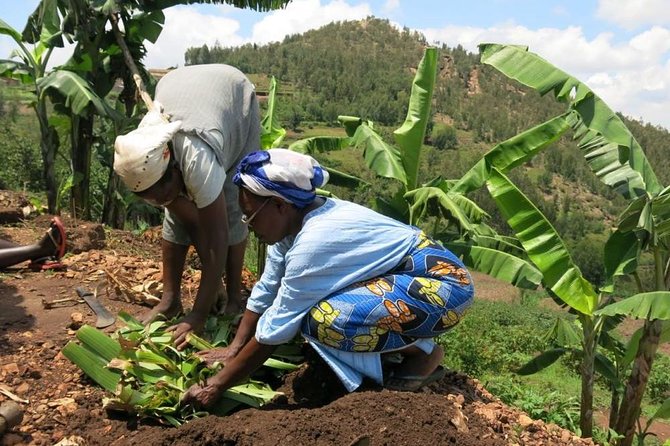
Making banana juice in Rwanda is not a quick cooking demonstration. You cut and gather green bananas, bury them in a hole to ripen, share lunch with the family hosting you, then return to dig them up and make the drink. That simple process gives the day a real sense of place.
I like the hands-on work and the chance to sit down for a home-style meal of foods such as cassava and beans. I also like the personal scale: this is a private activity for your group, not a crowded village show. The main drawback is the timing. At about eight hours, plus your own transport to Muhanga, it takes most of a day.
Key points to know before booking
- Bananas ripen in the ground: You cut green bananas, place them in a hole, and dig them up later for the juice-making stage.
- Lunch is part of the cultural exchange: Expect a traditional meal and time to talk with your hosts about daily life.
- The day is physically active: Cutting, collecting, fetching water, food preparation, and digging call for moderate fitness.
- Transport has a specific limit: Village transfers from Muhanga, also called Gitarama, are included, but getting to Muhanga is not.
- You get a private visit: Only your own group takes part, with a minimum booking of two people.
- Allow a full day: The experience lasts roughly five to eight hours and ends back at the meeting point.
Why banana juice makes a good Rwandan experience
Banana juice has a special place in Rwandan social life. It is commonly served at weddings and parties, so learning to prepare it connects a familiar drink with the people and work behind it.
The method is also a useful lesson in patience. You begin with green bananas, cut and collect them, and bury them in the soil so they can ripen. After lunch, you dig them up and continue the process. You are not simply watching a finished product appear on a table. You are involved from the first physical task to the final drink.
I like this format because it keeps the focus on ordinary community life. The activity includes work that may seem small to you, such as collecting bananas, fetching water, or helping with food. Those tasks are the point. They give you something to do with your hands and make conversation with your hosts more natural.
The experience has a 4.7 rating from three published reviews, with repeated praise for the warm welcome, tasty juice, traditional clothing, dancing, laughter, weaving, and contact with village life. Those details suggest a day built around participation rather than a formal performance.
Other Kigali days people book alongside this one:
- Kigali City Tour
★ 5.0 · 452 reviews - Kigali: Walking Tour with a Local Guide
★ 4.9 · 234 reviews - One-day Akagera National Park Game Drive with a Choice 4×4
★ 5.0 · 105 reviews
Starting at Azizi Life and meeting your hosts
Your day begins at Azizi Life, at NR1 in Gitarama, Rwanda. Gitarama is also known as Muhanga, so confirm that you understand the exact meeting point when you arrange your plans.
At the centre, you receive a briefing before heading to the rural community. The local guide then takes you from Muhanga to the village and brings you back at the end. Transport between the town and the village is included, but transport to and from Muhanga is not. If you are staying elsewhere, the supplier can arrange that extra transfer for an additional payment.
The first welcome matters. You meet artisans and the family who will host your group for the day. Because this is a private activity, the tone should be more personal than a large group excursion. You can ask questions about community life, and your hosts may ask about your home country as well.
That exchange is one of the strongest parts of the experience. You are not just receiving information from a guide. You are spending time with people who live in the community and taking part in a shared day.
Cutting green bananas and preparing the ripening hole
The work starts with green bananas. You help cut and collect them, then prepare a hole in the ground and place the bananas inside so they can ripen.
This is a hands-on job, and it is worth dressing for practical activity rather than a polished city outing. The tour calls for a moderate level of physical fitness. You should be comfortable with cutting, carrying, bending, walking around the community, and later digging the bananas up again.
The unusual part is the pause built into the process. The bananas do not ripen instantly. While they rest underground, the day moves into other activities, including lunch and possible help with water or food preparation.
That pause gives you time to see how the juice fits into a larger pattern of work. The day is not only about a recipe. It is about how food is gathered, prepared, shared, and enjoyed in a community setting.
Helping with water and food preparation
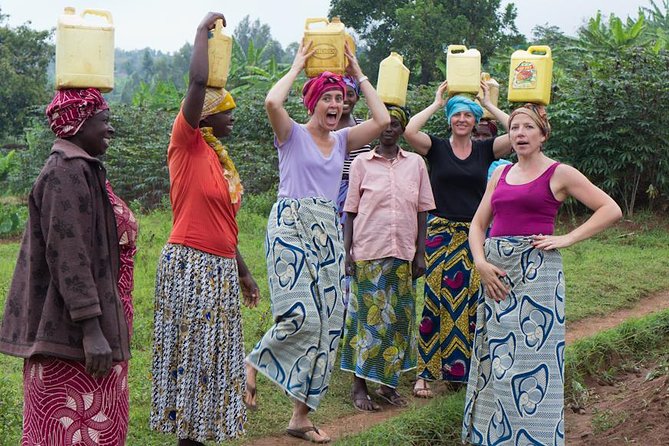
After the bananas are buried, you may help fetch water or continue helping with food preparation. The wording matters here: these are possible activities, not guaranteed steps for every group.
You should also keep your expectations realistic. This is not a staged craft workshop where every minute follows a fixed script. The exact work may depend on what your hosts are preparing and what your group is able to do.
That flexibility can be a strength. You get a closer look at daily tasks, and your hosts can shape the visit around the needs of the household. It also means the experience may feel less polished than a museum demonstration. I would choose it for the contact and the work, not for a tightly timed schedule.
Same hills, a completely different day out:
- Private Full-day Kigali City Tour with Pickup and Lunch
★ 5.0 · 79 reviews - Kigali Walking Tour
★ 4.5 · 78 reviews - Kigali E-Bike City Tour with Breakfast
★ 4.9 · 73 reviews - Private 1 Day Akagera Big Five Safari with pick up and lunch.
★ 5.0 · 72 reviews
Sitting down to a traditional Rwandan lunch
After the morning tasks, you share lunch with your hosts. A typical meal may include cassava and beans, and bottled water is included.
The meal is more than a break in the schedule. It is the main chance to sit, talk, and ask questions about life in the community. You may also be asked about your own home country, so bring a little curiosity and a willingness to have a two-way conversation.
An hour is set aside for lunch. That gives the meal enough time to feel social rather than rushed, while leaving room for the second stage of the banana work.
Do not book this day expecting restaurant service or a menu chosen around tourist tastes. The value is in sharing the kind of food served in a local home. If you have dietary concerns, the supplied details do not specify how they are handled, so ask the provider before booking.
Digging up the ripe bananas and making the juice
After lunch, you dig up the bananas. They have had time to ripen underground, and you then take part in the juice-making process.
This is the moment that brings the morning together. You have seen the raw green fruit, helped prepare it, waited through lunch, and now return to complete the work. The drink is not an abstract cultural symbol. You can connect it to the actual steps that produce it.
The finished juice is served at social occasions such as weddings and parties in Rwanda. That gives the tasting a useful cultural context. You are learning not only how a drink is made, but also why it matters in social life.
The published accounts also describe traditional attire, weaving, feeding cows, harvesting Napier grass, dancing, and laughter. These activities may not be part of every visit, so do not treat them as promised inclusions. Still, they show the wider range of contact that can happen during a community day.
The strongest praise focuses on the welcome and the shared enjoyment at the end. If you are looking for a quiet, formal lesson, this may feel too social. If you like joining in and laughing with your hosts, that is likely to be a major benefit.
Ending at the local handicraft store
The day finishes with a stop at a local artisan market or handicraft store. This gives you time to shop for souvenirs after the village visit.
The shopping stop is useful because it connects with Azizi Life’s work with artisans, but you should treat it as an optional final part of the day rather than the main reason to book. The core experience is the community visit, the food, and the banana juice process.
A craft purchase can also be a more meaningful souvenir than a generic item bought in a transport hub. Still, prices and products are not provided, so you should decide for yourself what fits your budget.
The activity ends back at the meeting point. That makes your return transport from the village straightforward, but you remain responsible for reaching Muhanga in the first place unless you pay for an added transfer.
What the $90 price includes
The cost is $90 per person. That is not a low-cost cooking class, but it covers much more than instruction. Included are the local guide, lunch, bottled water, local taxes, gratuities, and transport from Muhanga to the village and back.
I see the value in the full-day format. You are paying for transport within the activity area, a private community visit, a meal, and several hours of direct participation. The experience also requires preparation because the bananas need time to ripen, which helps explain why last-minute bookings are not accepted.
Group discounts are available, so the per-person cost may make more sense for a larger private group. A minimum of two people is required, and the private format means your group is the only group taking part.
The price is less attractive if you only want a short tasting or a quick lesson. You also need to add the cost of reaching Muhanga unless that transfer is arranged separately. For two people who want a personal cultural day and have room in the budget, the package is easier to justify.
Timing, booking, and physical demands
Plan on five to eight hours, with the full version taking about eight hours. The schedule includes the initial briefing, travel to the village, banana preparation, possible household tasks, an hour for lunch, the second banana session, and the artisan stop.
Book at least 96 hours before the start time. The community needs enough notice to prepare the bananas, and a booking made too soon may need to be rescheduled. Confirmation is sent within 48 hours, subject to availability.
The activity is best for adults and older children who can manage moderate physical activity. A child rate applies only when the child shares with two paying adults. Service animals are allowed, and the meeting point is near public transportation.
Free cancellation is available up to 24 hours before the start time for a full refund. Changes or cancellations made within 24 hours are not accepted for a refund.
Who will get the most from this community visit
I would recommend this experience to you if you want direct contact with local hosts and enjoy learning through work, food, and conversation. It suits people who prefer a small private setting to a large scheduled tour.
It is also a good match if you have already seen Kigali’s city sights and want a day in a rural community. The activity does not rely on a long list of attractions. Its interest comes from the people you meet and the process you share.
Families may enjoy the banana work and artisan stop, provided everyone can handle the physical tasks. Couples and friends can also make good use of the private format, especially since the minimum booking is two people.
I would think twice if you dislike unstructured time, physical chores, or eating a traditional meal chosen by your hosts. The day is not designed for someone who wants air-conditioned transport, a short schedule, or a polished demonstration with no participation.
Should you book the banana juice experience?
Book it if you want to understand Rwanda through an everyday food tradition rather than through a standard sightseeing stop. The green banana preparation, underground ripening, shared lunch, and final juice-making give the day a clear story and plenty of direct participation.
Before paying, make three checks: confirm how you will reach Muhanga, leave at least four days for the community to prepare, and make sure your group is comfortable with moderate physical activity. If those points work for you, the $90 price offers a personal full-day visit with lunch, local transport, and a private setting.
Skip it if your schedule is tight or you only want a brief food tasting. For everyone else, this is a warm, practical way to spend a day with a Rwandan community, with banana juice as the thread tying the visit together.
FAQ
Where does the banana juice experience begin?
It begins at Azizi Life on NR1 in Gitarama, Rwanda. Gitarama is also referred to as Muhanga.
How long does the experience last?
The activity lasts approximately five to eight hours, with the full itinerary described as taking about eight hours.
Is transport included?
Transport from Muhanga, also called Gitarama, to the rural village and back is included. Transport to and from Muhanga is not included, but the supplier can arrange it for an additional payment.
What food is included?
Lunch and bottled water are included. The lunch may include traditional Rwandan foods such as cassava and beans.
How far ahead must I book?
You need to book at least 96 hours before the experience begins so the community has time to prepare the bananas. Confirmation is provided within 48 hours, subject to availability.
Is this a private activity?
Yes. Only your group takes part, and at least two people are required per booking.
Do I need to be physically fit?
You should have a moderate level of physical fitness. Activities can include cutting and collecting bananas, digging, fetching water, and helping with food preparation.
Are children allowed?
Yes. A child rate applies when the child is sharing with two paying adults.
What is the cancellation policy?
You can cancel up to 24 hours before the experience starts for a full refund. Cancellations or changes made less than 24 hours before the start time are not accepted for a refund.
Just added around Kigali
- Private Half-Day Guided Kigali City Tour with Coffee Break Included★ 5.0 · 6 reviews
- Vegan Fine Dining Experience★ 5.0 · 5 reviews
- Private Transfer from Kigali Airport (KGL) to Kigali★ 4.0 · 5 reviews
- 2 Days Mountain Gorilla Safari Rwanda★ 5.0 · 4 reviews
- 1 Day Akagera Wildlife Safaris Rwanda (2 Pax Min)★ 5.0 · 5 reviews
- Private Memorial Day Tour Ntarama and Nyamata★ 5.0 · 3 reviews
- From Kigali: 8 Hour Day-trip Lake Kivu Cruise Experience★ 4.5 · 3 reviews
- Ntarama and Nyamata Genocide Memorial Day Tour★ 4.5 · 3 reviews
Kigali Tours, compared.

One-day Akagera National Park Game Drive with a Choice 4×4
Read our review →
Private Full-day Kigali City Tour with Pickup and Lunch
Read our review →

Private 1 Day Akagera Big Five Safari with pick up and lunch.
Read our review →
Mount Kigali and Cultural Village Tour with Snacks
Read our review →Browse the lists this tour appears in