
Reviewed · GUIDED
Kigali: Motorbike Guided Tour
Kigali makes excellent sense from the back of a motorbike. The city’s rolling hills and tidy streets let you cover a lot of ground in six hours, while the open-air ride gives you quick views into neighborhoods, markets, and daily life. You’ll visit major sights, but you’ll also have room for local stops that a standard car tour might skip.
I like the private format, which lets you ask for more history, more markets, or more art without waiting for a group. I also like the human side: guides including Cedric, Japhet, and Sandra have been praised for careful riding, warm conversation, and thoughtful hotel transfers. The main consideration is simple: a motorbike is exposed to sun, wind, dust, and traffic, and the listed price is $50 for a group of up to one, so confirm the cost if you are booking with another person.
Key points to know before you ride
- Six hours on Kigali’s hills: You get a broad city tour rather than one short sightseeing loop.
- A private English-speaking guide: The route can be adjusted to your interests and pace.
- Major history and culture stops: The Kigali Genocide Memorial, Belgian Peacekeepers Memorial, Kimironko Market, Nyamirambo, and Inema Arts Centre are all included.
- A practical way to see more: Motorbikes make transfers short and help you reach several different parts of Kigali in one day.
- Hotel pickup and drop-off: You begin and end in Kigali, with transport arranged around the ride.
- Check the food details: The description refers to bottled water and snacks such as rolex, while the formal inclusions say food and drinks are not included.
Why a motorbike works so well in Kigali

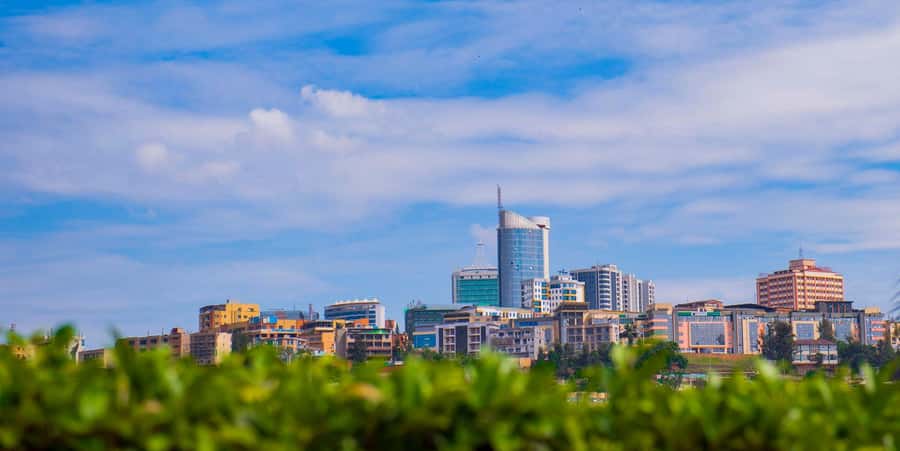
Kigali is spread across a series of hills, so distances can look modest on a map and take longer on the road. A motorbike gives you a brisk way to connect the city center with Nyamirambo, Kimironko, and the eastern side of town without making the day feel like a string of long vehicle transfers.
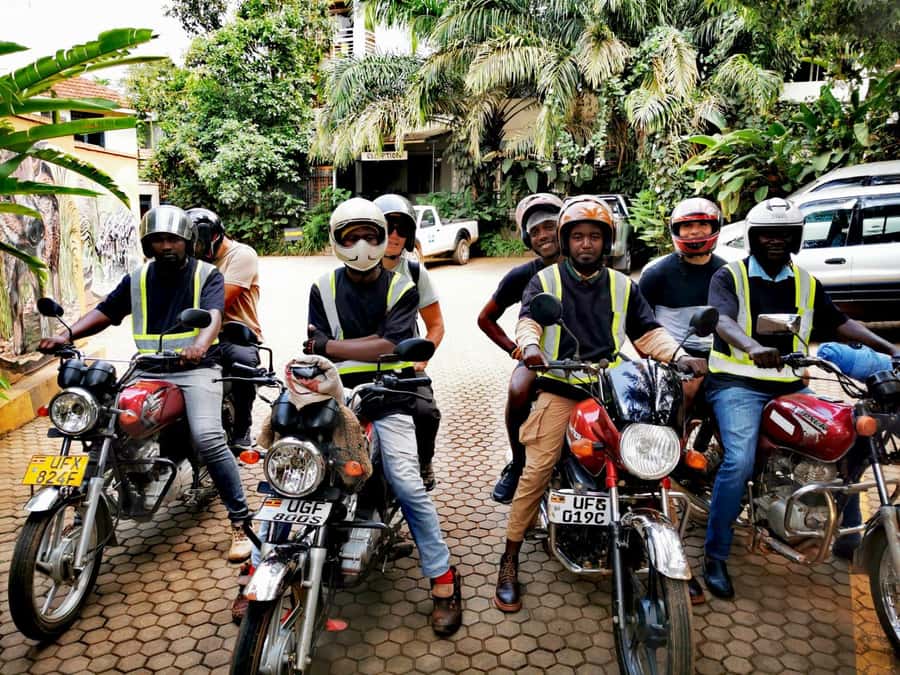
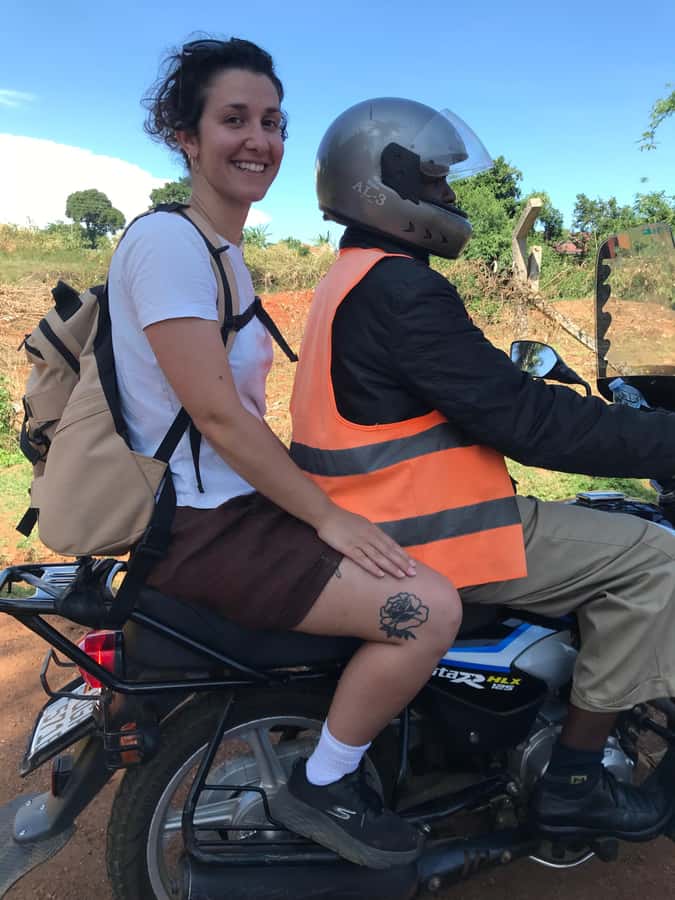
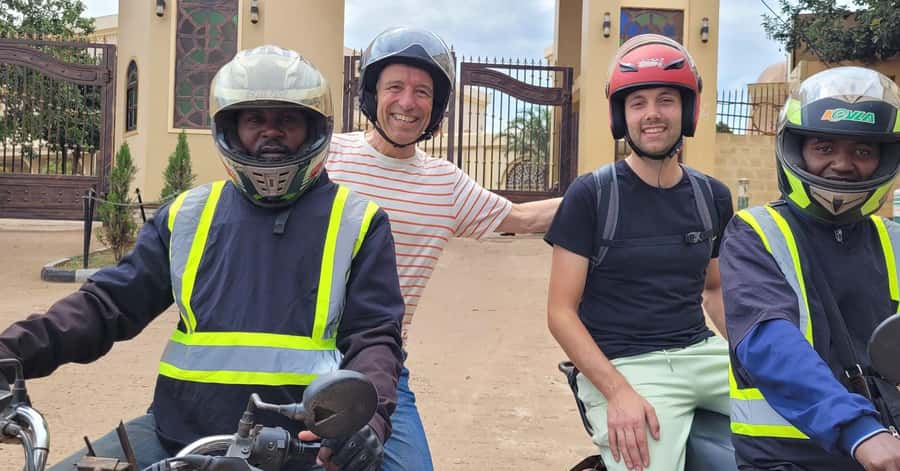
You ride behind an experienced driver-guide rather than navigating alone. That matters if you want to watch the city instead of watching directions. The route uses well-organized streets, and the ride itself adds a little excitement without turning the outing into a stunt show.
The experience is private, with an English-speaking guide. That gives you a useful level of control. You can ask for more explanation at the memorial, spend longer at a market, or keep moving if you are more interested in the city’s views than in shopping.
The trade-off is comfort. You are outdoors for much of the day, and the six-hour duration is substantial. Wear practical clothing, secure loose belongings, and be ready for a ride that feels more active than a normal city bus tour.
A few more Kigali trips to weigh up
- Kigali: Walking Tour with a Local Guide
★ 4.9 · 234 reviews - Kigali City Tour with a Local Guide and Driver
★ 5.0 · 49 reviews - Kigali: Guided Art, History, and Food Tour with Moto Ride
★ 4.9 · 34 reviews
Starting in the Kigali CarFree Zone
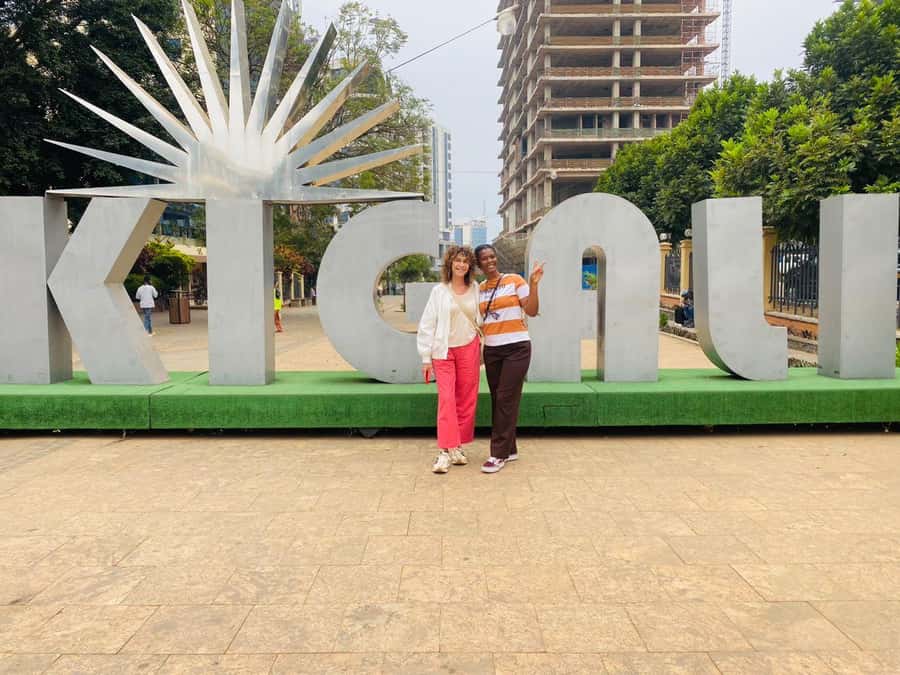
After pickup in Kigali, the route begins at the Kigali CarFree Zone. You have about 10 minutes for a guided visit, photos, and a short break.
This is a good opening stop because it gives you an easy first look at the city’s public spaces before the ride moves into denser neighborhoods. The stop is brief, so think of it as a quick orientation rather than a full walking tour.
Your guide can help set the tone for the day here. If you care most about architecture, local life, or recent history, say so early. The private setup makes that kind of adjustment possible.
Remembering the Belgian Peacekeepers
The next transfer takes about 10 minutes, followed by roughly 30 minutes at the Belgian Peacekeepers Memorial. You have time for a guided visit, photographs, a break, and some shopping.
This stop adds important context to Kigali’s modern history. It is not simply another photo point, and you may want to give it your full attention rather than rushing through it. The shopping element is useful if you want a small local purchase, but it is not the main reason to visit.
The guide’s role matters here. A careful explanation can help you understand the memorial’s place in Rwanda’s past without reducing a serious subject to a quick stop. If you want more time for reflection, ask how the schedule can be adjusted.
Looking across Kigali Province
The next listed stop is in Kigali Province, with about 25 minutes for photos, a guided visit, and shopping. The exact focus of this stop is not described in detail, so treat it as a flexible part of the route rather than a single must-see monument.
This is where the motorbike format earns its keep. You can pause for a view, look around an area that interests you, or ask your guide to explain what you are seeing. The city’s hills and green surroundings give the ride much of its visual appeal, especially as you move between neighborhoods.
Since shopping is included at several points, tell your guide if you want to browse or would rather spend your time on streets and viewpoints. Six hours sounds generous, but the day includes many stops, so small choices affect how relaxed the final hours feel.
Same hills, a completely different day out:
- Kigali City Tour
★ 5.0 · 452 reviews - One-day Akagera National Park Game Drive with a Choice 4×4
★ 5.0 · 105 reviews - Private Full-day Kigali City Tour with Pickup and Lunch
★ 5.0 · 79 reviews - Kigali Walking Tour
★ 4.5 · 78 reviews
Taking time at the Kigali Genocide Memorial
From there, the ride continues to the Kigali Genocide Memorial. The schedule includes sightseeing, a guided visit, photographs, and walking, but it does not give a fixed number of minutes.
This is the emotional center of the tour. The 1994 genocide against the Tutsi is a central part of Rwanda’s modern story, and the memorial offers a serious setting for learning about what happened and how the country remembers it. You should expect this stop to be moving and difficult at times.
I would not treat the memorial as a box to tick between markets and art. Give yourself mental space before and after the visit. Ask questions respectfully, listen closely, and allow the subject to change the mood of the day. Entry fees are not included in the tour price, so confirm the current admission cost before you go.
Walking through Nyamirambo
A short eight-minute transfer brings you to Nyamirambo for about 30 minutes of guided touring, free time, sightseeing, and walking.
Nyamirambo gives the itinerary a more everyday feel. Instead of only viewing official landmarks, you get a chance to see a lived-in Kigali neighborhood and observe the rhythm of local streets. The guide can add meaning to what you pass, from the way people use public spaces to the role of small businesses and markets.
Half an hour is enough for an introduction, not an exhaustive neighborhood tour. Keep your expectations in check and use the free time well. This is a good place to walk, look around, and ask your guide to point out details you might otherwise miss.
Shopping and people-watching at Kimironko Market
After only a three-minute transfer, you reach Kimironko Market for about 35 minutes. The stop includes a guided visit, free time, and a break.
This is one of the most useful stops for seeing Kigali’s commercial side. Markets are not staged museums. They are working places, and the experience depends on how you approach them. Stay attentive, ask before photographing people or goods, and let your guide handle local questions when needed.
Thirty-five minutes gives you enough time to get a feel for the market and perhaps browse, though it is not a long shopping session. If buying something matters to you, tell the guide early so you do not spend the entire visit deciding what to look at.
The market also breaks up the heavier historical portions of the day. You move from remembrance to ordinary commerce, which helps show Kigali as a living city rather than a collection of memorials.
The unusual Nijo Eki Nishiguchi stop
The itinerary then lists a place called Nijo Eki Nishiguchi, with about 25 minutes for a break, photographs, and a guided visit. The name is unusual in a Kigali route, and no further explanation is provided.
Because of that, I would ask the operator what this stop refers to before booking. It may be a place name entered in error or a specific local point known to the provider. The wider tour still offers plenty of clearly identified stops, but precise information matters when you are planning a six-hour day.
A further 20-minute visit follows, described as a guided sightseeing stop without a name. This is another good reason to ask for the final route in advance if you prefer a clearly defined schedule. The private format may allow the guide to shape these less clearly described sections around your interests.
Art and conversation at Inema Arts Centre
The ride continues for 12 minutes to Inema Arts Centre, where you have about 20 minutes for photos, a guided visit, and free time.
This stop brings Kigali’s creative side into the day. You can look at contemporary work, ask about the artists, and take a break from the road. It is a compact visit, but it gives the itinerary more range than a tour focused only on memorials and viewpoints.
If art is a priority, mention it when you are picked up. The private group format should make it easier to ask for a little more explanation or to adjust the pace, though the total schedule includes several other stops.
Finishing at the Convention Center Roundabout
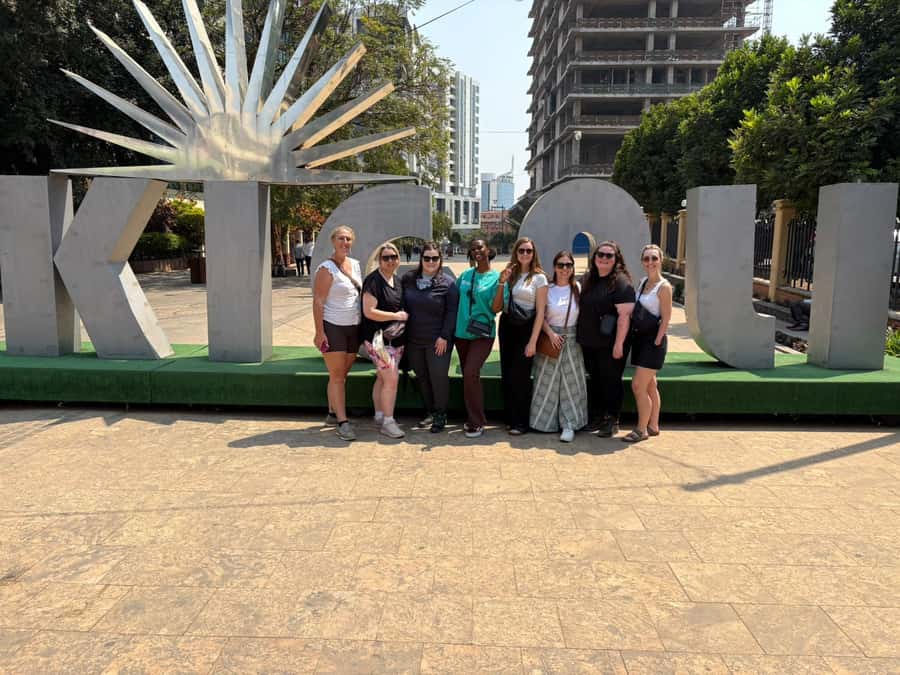
The final major stop is the Convention Center Roundabout, reached after a four-minute transfer. You have about 30 minutes for a break, a guided visit, and walking.
This is a relaxed way to finish the sightseeing portion. Use it for final photographs, a last conversation about Kigali, or a short walk before returning to your pickup point. The city’s modern public face contrasts nicely with the markets, neighborhoods, memorials, and art spaces visited earlier.
A seven-minute transfer returns you to Kigali. In practice, the full day includes many brief rides, so the motorbike keeps the route moving without making every connection feel like a major journey.
Guides who shape the day
The guide can make a large difference on this experience. The named guides connected with strong feedback are Cedric, Japhet, and Sandra.
Cedric was praised for explaining the sights clearly and for working with careful, safety-minded motorbike drivers. Japhet was singled out for open conversations about Rwandan life, culture, and the country’s changes since the genocide. Sandra was described as calm and patient, with smooth hotel pickup and extra care getting her passenger back after the tour.
You cannot assume you will receive a particular guide unless the operator confirms it. Still, you can ask for Japhet, Cedric, or Sandra when arranging the booking. The strongest quality to look for is not simply English ability. It is a guide who can shift between serious history, local customs, practical riding, and your own questions.
Is $50 good value for six hours?
At $50 for a group of up to one, the tour offers a lot of coverage for a solo visitor. You receive the motorbike, guide, and hotel pickup and drop-off, with a private six-hour route through several parts of Kigali.
The value is strongest if you want a guided overview in one day. Visiting the memorial, two memorial or civic sites, Nyamirambo, Kimironko Market, Inema Arts Centre, and the city center independently would require more planning and several separate rides.
The price does not include entry fees. Food and drinks are also listed as excluded, although the overview refers to bottled water and snacks such as rolex. Since those details do not match, ask exactly what is supplied before you set out and carry money for anything you want to buy.
The price wording says up to one person. If two people want to ride, ask whether each person needs a separate booking or whether another group rate applies. Do not assume the single-person price covers two passengers.
Who will enjoy this tour most?
I would choose this ride if you have one day in Kigali and want both major sights and ordinary city scenes. It suits solo visitors particularly well because the private format removes the awkwardness of joining a large group.
It is also a good fit if you like moving around rather than spending hours inside one museum. The motorbike lets you see more of Kigali’s hills, neighborhoods, and streets while still stopping for meaningful history and culture.
You may prefer a slower walking tour if you dislike traffic, outdoor exposure, or frequent transfers. The Genocide Memorial also deserves thoughtful time, so anyone seeking a long museum visit should ask if the itinerary can be adjusted.
Free cancellation is available up to 24 hours before departure for a full refund, and you can reserve now and pay later. Starting times depend on availability, so check the schedule before making other plans.
Should you book this Kigali motorbike tour?
Book it if you want a broad, personal introduction to Kigali and like the idea of seeing the city from street level. The best reasons are the private guide, the mix of serious history and daily life, and the chance to talk directly with someone who knows the city.
Ask three questions first: Which guide is assigned? What exactly is the stop labeled Nijo Eki Nishiguchi? Are water and snacks included, or should you bring your own? If the answers suit you, $50 is a fair price for a solo six-hour tour with pickup, drop-off, and a lot of ground covered.
FAQ
Where does the Kigali motorbike tour take place?
The tour takes place in Kigali Province, Rwanda, with pickup and drop-off in Kigali.
How long does the tour last?
The tour lasts six hours, including transfers, sightseeing stops, walking, and breaks.
What is included in the price?
The price includes the motorbike, an English-speaking guide, and hotel pickup and drop-off.
Is the tour private?
Yes. It is offered as a private group experience, with the listed price covering a group of up to one person.
What language does the guide speak?
The live tour guide speaks English.
Which main sights are visited?
The route includes the Kigali CarFree Zone, Belgian Peacekeepers Memorial, Kigali Genocide Memorial, Nyamirambo, Kimironko Market, Inema Arts Centre, and Convention Center Roundabout.
Is entry to the Kigali Genocide Memorial included?
No. Entry fees are not included in the tour price.
Are food and drinks included?
The formal inclusions say food and drinks are not included. The activity description refers to bottled water and snacks such as rolex, so confirm this detail with the provider before departure.
Can I cancel for a full refund?
Yes. You can cancel up to 24 hours in advance for a full refund.
Can I reserve without paying immediately?
Yes. The reserve-now, pay-later option lets you book without paying at the time of reservation.
Just added around Kigali
- Private Half-Day Guided Kigali City Tour with Coffee Break Included★ 5.0 · 6 reviews
- Vegan Fine Dining Experience★ 5.0 · 5 reviews
- Private Transfer from Kigali Airport (KGL) to Kigali★ 4.0 · 5 reviews
- 2 Days Mountain Gorilla Safari Rwanda★ 5.0 · 4 reviews
- 1 Day Akagera Wildlife Safaris Rwanda (2 Pax Min)★ 5.0 · 5 reviews
- Private Memorial Day Tour Ntarama and Nyamata★ 5.0 · 3 reviews
- From Kigali: 8 Hour Day-trip Lake Kivu Cruise Experience★ 4.5 · 3 reviews
- Ntarama and Nyamata Genocide Memorial Day Tour★ 4.5 · 3 reviews
Guided, compared.

Guided Art, History, and Food Tour with Moto Ride
Read our review →

Private Half-Day Guided Kigali City Tour with Coffee Break Included
Read our review →
1 Day Guided Gorilla Trekking Safari Experience in Rwanda
Read our review →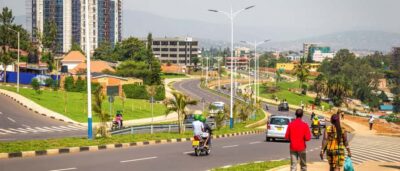

Browse the lists this tour appears in