
Reviewed · COFFEE EXPERIENCES
Kigali: Traditional Coffee Experience ( Bean to Brew)
Rwanda’s coffee story becomes much clearer when you handle the beans yourself. This two-hour experience takes you from coffee fields to roasting methods and finally to a Kigali tasting, with a chance to roast your own beans along the way. Making the coffee yourself is the main draw.
I like the mix of farming, craft, and tasting. You learn how coffee is grown and produced, then see how traditional and modern roasting change the final cup. I also like the personal touch: the guide receives strong praise for clear instruction, and one coffee enthusiast found the session useful even after grinding and blending beans at home.
The main catch is transport. Private transportation is not included, so you need to manage your way to the meeting point and any movement between stops. The $50 price is fair for a hands-on lesson, but it is less convenient than a tour with transfers included.
Key points at a glance
- Roast your own Rwandan beans: The practical part of the session puts you close to the work, not just watching a demonstration.
- See traditional and modern methods: Local specialists explain how different roasting approaches affect the coffee.
- Begin at Umurishyo Arts Gallery: The meeting point is KG 206 St in Kigali, near public transportation.
- Finish with a Kigali tasting: Sample several blends and discuss them with local coffee specialists.
- Small enough for conversation: The maximum group size is 20 people.
- Flexible cancellation: Cancel at least 24 hours before the start for a full refund, subject to the stated weather and minimum-group conditions.
From coffee field to Kigali cup
This experience follows a simple route: cultivation, roasting, and tasting. That order matters. You first see where the beans begin, then learn what happens after harvest, and finally taste the result in a Kigali coffee shop.
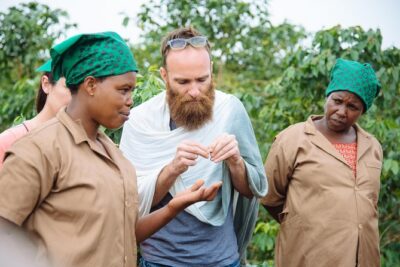
The coffee fields provide the farming context. Local farmers explain how the crop is cultivated and how community practices support production. The focus is not only on the plant itself, but also on the work behind each batch of coffee.
You should expect this part to be more educational than scenic. The supplied details do not promise a long farm walk or a particular type of plantation view, so book it for the chance to understand coffee production rather than for a sightseeing stop. If you enjoy meeting people who work directly with the crop, this opening section gives the experience its strongest sense of place.
The session also covers Rwanda’s coffee past and current sustainable methods. That helps you understand why coffee matters beyond the drink in your cup. It gives the tasting a useful frame: you are not sampling anonymous beans, but coffee connected to local farming and production.
A few more Kigali trips to weigh up
- Kigali: Traditional Coffee Experience ( Bean to Brew)
★ 4.8 · 54 reviews - Specialty Coffee Masterclass
★ 5.0 · 33 reviews - Women-led Coffee Farm Trek
★ 5.0 · 19 reviews
Starting at Umurishyo Arts Gallery
The activity begins at Umurishyo Arts Gallery, KG 206 St, Kigali, Rwanda. The gallery is also the ending point, so you have a clear place to return to once the session is finished.
The meeting point is near public transportation, which helps if you are staying in Kigali and do not have a private vehicle. Still, private transport is not included. Before booking, I would check the route to the gallery and confirm how you will reach the coffee fields, roastery, and final coffee shop.
The information provided does not specify the exact transport arrangement between each stop. That is worth clarifying with NuttinTODO before the day, especially if you are relying on taxis or public transportation. Allow a little planning time rather than arriving at the gallery and assuming all transfers are covered.
A mobile ticket is accepted, and confirmation is provided when you book. The group can include up to 20 people. That is not an intimate one-on-one lesson, but it is still a manageable size for a practical demonstration if the group is full.
Meeting the farmers and understanding the crop
The first main stage takes you into Rwanda’s coffee-growing area. Local farmers guide you through the care that goes into the crop, with attention to cultivation and sustainable community practices.
This is where the experience earns more than a standard café tasting. You get a clearer idea of the labor behind the beans before anyone talks about flavor notes or brewing. For a coffee drinker, that change in perspective can be more valuable than simply sampling another cup.
I would pay attention to how the guide connects farming choices with the finished coffee. The supplied details promise insight into cultivation and sustainability, but they do not list a specific farm, harvest season, or processing method. You should see this as an introduction to Rwanda’s coffee work, not a technical farming course.
The pace is also likely to be brisk because the full activity lasts about two hours. The field visit cannot offer unlimited time for questions, photographs, and a long walk. If you want a detailed agricultural tour, this may feel short. If you want a useful introduction before roasting, the timing makes sense.
Roasting your own beans with two methods

The roastery is the hands-on center of the experience. Here, local specialists explain traditional and modern roasting techniques, then give you a chance to take part rather than simply watch.
Roasting is where coffee starts to show its personality. Small changes in heat and timing affect aroma, color, and taste. You may find that this part explains more about your daily cup than the tasting alone, because you can connect the process with what you later smell and drink.
The traditional method gives the session a local craft element. The modern method provides a useful comparison. The point is not that one is automatically better than the other. It is seeing how technique changes the beans and why a coffee producer may choose one approach over another.
One of the strongest reasons to book is the chance to roast your own beans. A guide who can explain the steps clearly makes this much more rewarding, and the available feedback specifically praises the guide’s instruction and ability to make the process easy to follow. The guide’s name is not provided, so I would not count on requesting a particular person.
If you already grind your own coffee or make personal blends at home, bring questions. The session can add practical context to habits you already have. You may leave with a better sense of why different beans suit different roasting or blending choices.
Same hills, a completely different day out:
- Kigali City Tour
★ 5.0 · 452 reviews - Kigali: Walking Tour with a Local Guide
★ 4.9 · 234 reviews - One-day Akagera National Park Game Drive with a Choice 4×4
★ 5.0 · 105 reviews - Private Full-day Kigali City Tour with Pickup and Lunch
★ 5.0 · 79 reviews
Tasting several blends in Kigali
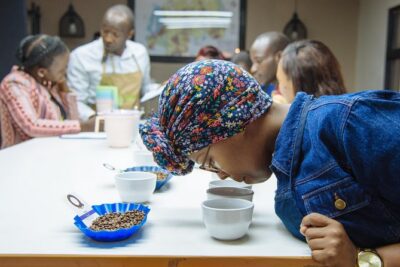
The final stage takes place in a Kigali coffee shop. You sample a range of blends prepared with care, then talk with local coffee specialists and other people in the group.
This is more useful than a quick cup at the end because you have just seen the earlier stages. You can compare the samples with what you learned about farming and roasting. The tasting also gives you a chance to ask about the character of each blend, though the exact coffees served are not specified.
Expect an exchange rather than a formal silent tasting. The format encourages conversation with the local team and the rest of the group. That social element suits you if you like learning through questions and discussion. It may be less appealing if you want a private tasting or a long, technical evaluation of every cup.
The final stop also brings the experience back to everyday Kigali. Coffee is not presented only as an export product or a farm commodity. It is part of a city café setting, where people meet, drink, and talk. That makes the ending feel connected to local life rather than tacked on as a souvenir sample.
What the $50 price really covers
At $50 per person, this is not the cheapest way to drink coffee in Kigali. You are paying for a guided, field-to-cup activity that includes the coffee stops, instruction, roasting participation, tasting, and all fees and taxes.
The value depends on how much you want to do. If you only want a good cup of coffee, spend less at a café. If you want to understand the process, roast beans yourself, and taste several blends with local guidance, the price is easier to justify.
Private transportation is not included, and that is the main cost concern. Your total spending will be higher if you need taxis between the meeting point and the different parts of the activity. The exact transfer plan is not stated, so ask NuttinTODO for practical details before you commit.
The two-hour length keeps the cost from becoming an all-day commitment. You can fit it into a Kigali schedule without giving up a full morning or afternoon. The tradeoff is that each section receives only a limited amount of time.
Who will enjoy this coffee experience
I would recommend this activity to coffee drinkers who want more than a café visit. It suits you especially well if you enjoy hands-on lessons, local food and drink traditions, and conversations with people who work close to the product.
It is also a good choice for someone who already grinds beans at home. One participant with that habit gained a better understanding of coffee production and found new value in the business behind the cup. You do not need that level of interest to enjoy the session, but prior curiosity will help you get more from the roasting section.
The experience may work for solo visitors, couples, and small groups. With a maximum of 20 people, it has room for social exchange but may not feel private. Service animals are allowed, and the meeting point is near public transportation.
The details do not state whether the fields or roastery are fully accessible, so ask about mobility needs before booking. The activity also depends on good weather and a minimum number of participants. If conditions force a cancellation, you are offered another date or a full refund.
Booking timing, cancellation, and practical planning
This experience is booked about 16 days ahead on average. That does not guarantee that every date fills early, but it suggests that planning ahead is sensible if your Kigali schedule is fixed.
You receive confirmation at booking, and the mobile ticket makes arrival straightforward. I would still save the meeting address, KG 206 St, and check the local route before the day.
You can cancel for a full refund up to 24 hours before the start time. Cancellations or changes made inside that 24-hour window are not accepted for a refund. The cut-off uses Kigali local time, so check the clock carefully if you are booking from another country.
Bad weather can affect the activity. If the provider cancels for that reason, you can choose another date or receive a full refund. The same choice applies if the minimum number of participants is not reached.
Should you book it?
Book this experience if you want to connect Rwanda’s coffee with the people and work behind it. The combination of coffee fields, two roasting styles, your own roasting session, and a final Kigali tasting gives the $50 fee real value for an interested coffee drinker.
Think twice if you want included transport, a long farm visit, or a private tasting. The two-hour schedule is compact, and the transfer details need checking. For most visitors who enjoy practical cultural experiences, though, this is a well-focused way to spend part of a Kigali day, with the roast-your-own-beans session providing the memorable hook.
FAQ
How long does the coffee experience last?
The activity lasts approximately two hours.
How much does the experience cost?
The listed price is $50 per person.
What is included in the price?
All fees and taxes are included.
Is private transportation included?
No. Private transportation is not included.
Where does the experience begin?
It begins at Umurishyo Arts Gallery, KG 206 St, Kigali, Rwanda.
Where does the experience end?
The activity ends back at the meeting point.
How many people can join the activity?
The maximum group size is 20 people.
What happens if I need to cancel?
You can receive a full refund if you cancel at least 24 hours before the experience start time. Cancellations or changes made less than 24 hours before the start are not refunded or accepted.
Just added around Kigali
- Private Half-Day Guided Kigali City Tour with Coffee Break Included★ 5.0 · 6 reviews
- Vegan Fine Dining Experience★ 5.0 · 5 reviews
- Private Transfer from Kigali Airport (KGL) to Kigali★ 4.0 · 5 reviews
- 2 Days Mountain Gorilla Safari Rwanda★ 5.0 · 4 reviews
- 1 Day Akagera Wildlife Safaris Rwanda (2 Pax Min)★ 5.0 · 5 reviews
- Private Memorial Day Tour Ntarama and Nyamata★ 5.0 · 3 reviews
- From Kigali: 8 Hour Day-trip Lake Kivu Cruise Experience★ 4.5 · 3 reviews
- Ntarama and Nyamata Genocide Memorial Day Tour★ 4.5 · 3 reviews
Coffee Experiences, compared.


Full Day Shared Akagera Safari Tour with Lunch and Coffee
Read our review →

Local Community Tour(Cultural, Coffee,Village walk,Local food)
Read our review →
Private Half-Day Guided Kigali City Tour with Coffee Break Included
Read our review →Browse the lists this tour appears in