
Reviewed · COFFEE EXPERIENCES
Rwandan Coffee Experience
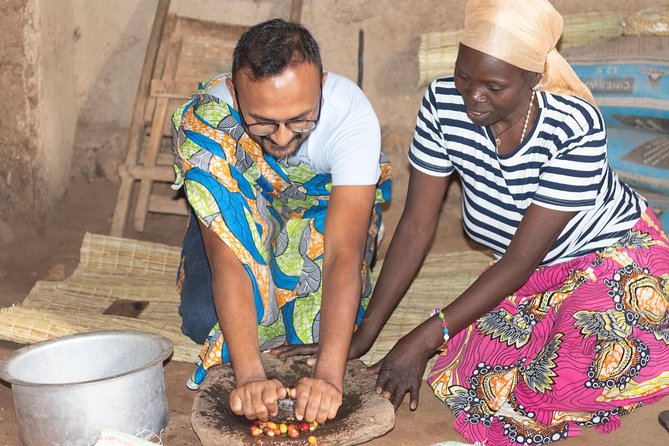
The best part of the Rwandan Coffee Experience is that coffee does not arrive as a finished product. You help pick the cherries, carry water, wash and pulp them, then roast and grind the dried beans yourself. I like that the work connects you with a rural household instead of keeping you behind a tasting counter.
I also like the generous pace and the local lunch, which gives you time to talk with the family about daily life. The main drawback is transport: the $90 price does not include the trip from Kigali, though Azizi Life can arrange it for an added charge. You also need moderate fitness for uneven ground and hands-on chores.
Key things to know before you go
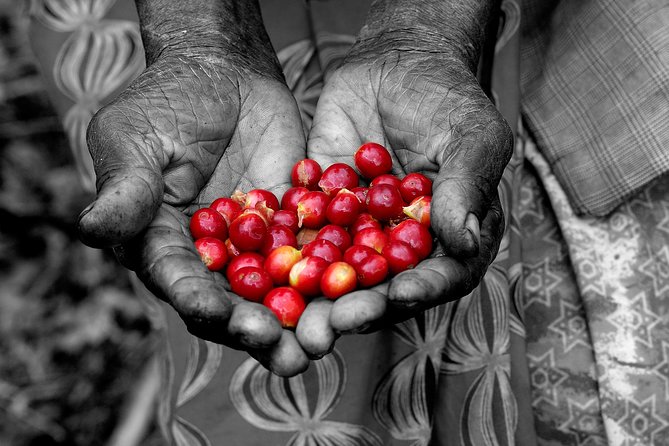
- You make the coffee by hand: Pick, wash, dry, roast, and grind coffee as part of one long process.
- Lunch is part of the welcome: You eat the kind of Rwandan food the family normally prepares.
- The day leaves Kigali: The village portion is reached from Muhanga, also called Gitarama, and return transport from town is included.
- Bona may lead your visit: One detailed account names Bona as the guide, though guide assignments can vary.
- It is private: Only your own group participates, with a minimum of two people per booking.
- Plan for a full half-day or longer: The experience takes about five to eight hours, depending on the day’s pace.
From Kigali to the coffee country near Muhanga
This is not a quick coffee tasting in central Kigali. The day begins with a briefing, followed by a drive toward a village outside Muhanga, known as Gitarama in the meeting information. The meeting point is on NR1 in Gitarama, and return transport from Muhanga town to the village is included.
That detail matters when you budget. The listed price is $90 per person, but transportation from Kigali is not included in that amount. Azizi Life can arrange Kigali transport on request for an additional fee. If you are staying in Kigali, ask about this before booking so the final price is clear.
The timing also needs attention. The stated operating window is 8:00 to 11:00 each day, which appears to refer to available start times rather than the total length of the activity. Since the full experience lasts roughly five to eight hours, an early start is the sensible choice. You will want enough daylight and energy for the village work, lunch, roasting, and return trip.
At the start, your guide gives you a briefing. One account identifies the guide as Bona, who accompanied the group from the Azizi Life base toward the village. The experience provider is Azizi Life, an organization that also connects visitors with local artisans. At the base, you might have coffee and a pastry and browse handmade goods before leaving, though gift-shop purchases are not included.
A few more Kigali trips to weigh up
- Kigali: Traditional Coffee Experience ( Bean to Brew)
★ 4.8 · 54 reviews - Specialty Coffee Masterclass
★ 5.0 · 33 reviews - Women-led Coffee Farm Trek
★ 5.0 · 19 reviews
Getting ready for village work
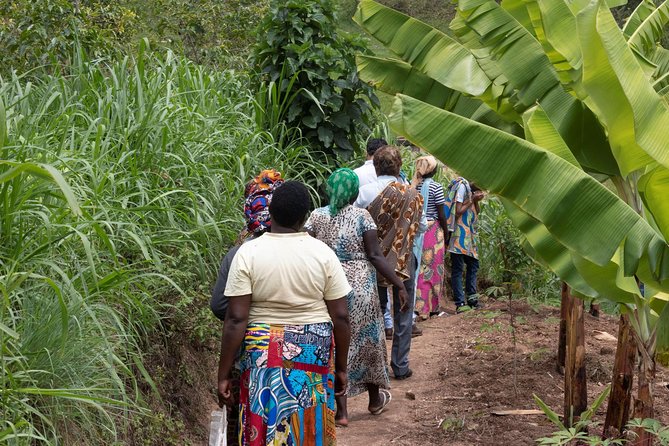
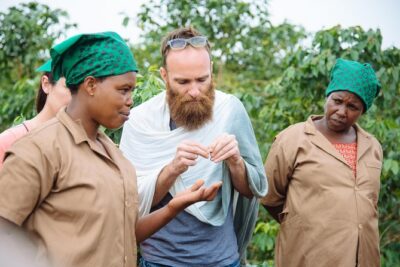
On arrival, you are welcomed and given suitable attire before heading into the fields. The clothing is practical rather than decorative. It prepares you for uneven ground and the physical nature of the work.
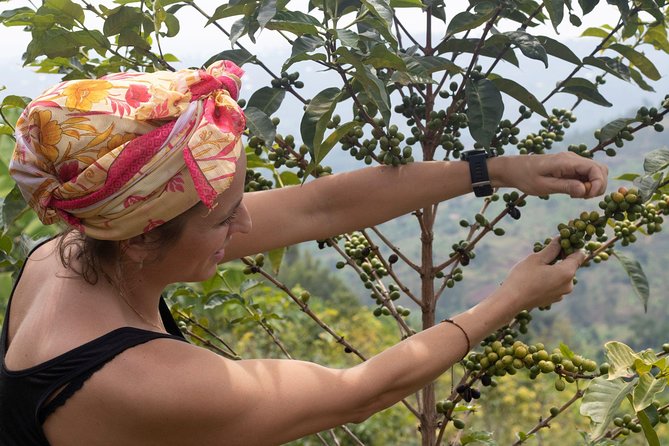
Your guide explains how coffee plants grow and how to choose the right cherries. This is the first useful lesson: good coffee starts with careful picking. You learn to look for ripe cherries rather than simply stripping a branch, then harvest them by hand.
I like this part because it slows down the usual coffee ritual. In a café, the finished drink is the focus. Here, the coffee plant and the people who tend it take center stage. You see that a cup depends on repeated small jobs, each one done at the right time.
The activity calls for moderate physical fitness. You may walk over uneven surfaces, work in the fields, and carry water. Children can take part only with an accompanying adult, and the child rate applies when the child shares with two paying adults. This is not a passive outing, so families should judge the child’s comfort with outdoor work before booking.
Picking cherries and carrying water
After the introduction, you head to the coffee plants. The guide shows you which cherries to select and how to harvest them. The supplied details do not give a fixed amount of time for picking, so expect the day to adjust to the group and the work at hand.
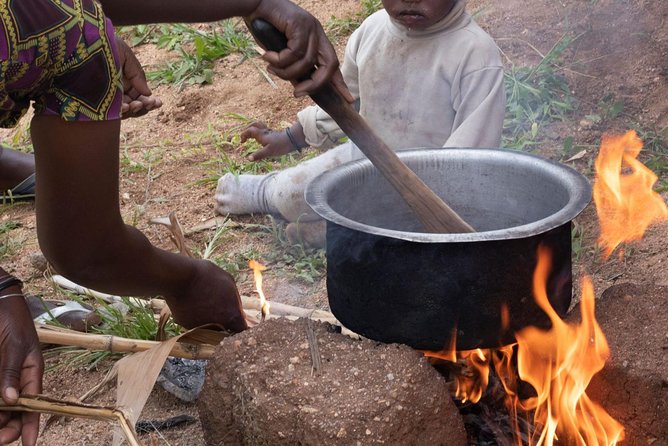
Next comes water. You fetch water for the processing stage, or you can choose to help with food preparation in the kitchen instead. That choice gives the day two different paths. Carrying water connects you directly with the coffee work, while kitchen help lets you take part in the meal and household routine.
Neither option is presented as a staged photo stop. The point is to take on a small part of the work. That makes the experience better suited to someone who wants contact with ordinary rural routines than to someone looking for a polished attraction with constant narration.
You should also expect a little uncertainty in the best sense. Farm tasks depend on the people, the place, and the day. The experience promises the main steps, but it is not a factory tour with a stopwatch. Allow five to eight hours rather than trying to squeeze it between two fixed appointments.
Washing and pulping the coffee cherries
Once the cherries and water are ready, you wash and pulp the coffee. This is where the raw fruit begins its change into something you recognize as a coffee bean. You then leave the processed coffee out to dry.
The supplied information does not specify the exact drying equipment or the length of the drying period. The important point is that you work through the early processing yourself, then continue with dried coffee later in the day. You are not simply shown a demonstration. You handle the stages that usually remain invisible to the person drinking the final cup.
This hands-on sequence is the heart of the experience. Picking alone could feel like a farm visit. Roasting alone could feel like a workshop. Doing the jobs in order gives you a better sense of how much labor sits behind a small cup.
The process also helps explain why the price is more than the cost of a normal coffee stop. You are paying for a private, guided day, transport from Muhanga town to the village, lunch, drinks, and time with a host family and local guide. Coffee is the theme, but the real product is access to the work and the people behind it.
Same hills, a completely different day out:
- Kigali City Tour
★ 5.0 · 452 reviews - Kigali: Walking Tour with a Local Guide
★ 4.9 · 234 reviews - One-day Akagera National Park Game Drive with a Choice 4×4
★ 5.0 · 105 reviews - Private Full-day Kigali City Tour with Pickup and Lunch
★ 5.0 · 79 reviews
A family lunch and time to talk
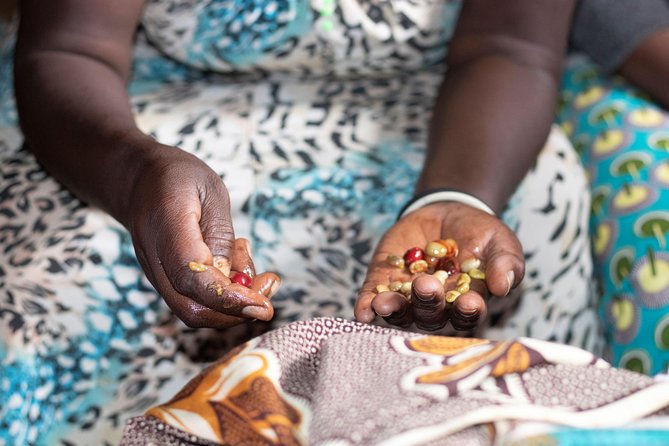
Lunch is a local Rwandan meal that the family would normally eat. This is a valuable part of the day because it is not described as a special tourist menu. You receive food connected to the household and have time to ask about life in the community.
The conversation may be one of the strongest reasons to choose this experience. The schedule leaves room to sit down rather than rushing from one activity to another. You can ask your hosts about their work and community, while the guide helps make the exchange comfortable.
Food and bottled water are included, along with coffee and/or tea. Gratuities, a local guide, and a tour host are also included. Items bought in the gift shop cost extra, so bring a separate budget if you want local artisan goods.
One detailed account describes stopping at Azizi Life for coffee and pastry and buying items from local artisans before heading to the village. That suggests the wider Azizi Life visit can include a chance to support makers directly. Keep in mind that purchases are optional and not part of the $90 fee.
Roasting and grinding your own coffee
After lunch, you return to the coffee. The dried beans are hand roasted and ground. This is the satisfying finish to the day because you can connect the early field work with the final preparation.
The experience description does not specify the kind of roasting equipment or grinder used. You should therefore expect a simple, hand-led process rather than a technical coffee class with detailed measurements and professional tasting terms.
I like that the final cup comes after the less glamorous jobs. You have picked cherries, helped with water or cooking, washed and pulped the fruit, and waited for the processed coffee to dry. By the time you roast and grind it, the drink carries the memory of the entire day.
Coffee and tea are included, but the supplied information does not promise a specific serving size or a formal tasting session. If you are a serious coffee enthusiast, this may feel more like a cultural and agricultural experience than a lesson in extraction, brewing ratios, or professional cupping.
What makes the private format useful
This is a private activity, so only your group participates. That is a real advantage here. Field work, kitchen choices, and conversation are easier when you are not trying to keep up with a large bus group.
A private format also lets you ask practical questions. You can spend more time on the coffee plants, talk longer over lunch, or choose kitchen preparation instead of fetching water, depending on what the host and guide arrange that day.
The tradeoff is the minimum booking requirement. At least two people must book. Solo visitors cannot reserve it alone under the stated terms, though a solo visitor could potentially join another arrangement only if the provider offers one directly.
Group discounts are available, which may improve the value for families or friends. Since Kigali transport costs extra, larger groups should ask for the combined transport and activity price rather than judging value from the per-person fee alone.
Is $90 a fair price?
For a short coffee tasting, $90 would be high. For a five-to-eight-hour private day that includes village transport from Muhanga, a local guide, host support, lunch, bottled water, and the full hands-on coffee process, the figure is easier to justify.
The experience is also designed around direct contact with a family and local community. That makes the price partly about time and access, not just food and transport. Gratuities are included, which removes one small cost question at the end.
The biggest extra cost is getting from Kigali to Muhanga. You pay for that separately if you need Azizi Life to arrange it. This can change the value calculation, especially for two people traveling on a tight budget.
I would compare it with what you want from your Rwanda trip. If your priority is a fast, inexpensive tasting, choose a café or shorter coffee stop. If you want a full day that links farming, food, family life, and coffee preparation, the price is more reasonable.
Who will enjoy this day most?
I would choose this for couples, families with older children, friends, and small private groups who want a meaningful activity outside Kigali. It suits people who enjoy doing rather than watching and who do not mind a little mud, uneven ground, or work with their hands.
It is also a good fit if you want to support local hosts and artisans through a structured visit. The artisan stop and gift shop provide an optional way to buy local goods, while the village visit gives you time with the family and cooperative members.
I would think twice if you have very limited mobility, dislike outdoor chores, or need a tightly timed schedule. The activity requires moderate fitness, and the five-to-eight-hour range leaves less control than a short city tour.
The coffee itself should not be the only reason you book. The strongest part is the whole chain, from plant to cup, along with the meal and conversation. If that wider cultural experience appeals to you, this is a good match.
Practical details for a smoother day
Book at least two people, and confirm the exact pickup plan if you are starting in Kigali. The stated meeting point is NR1 in Gitarama, while transport from Muhanga town to the village is included. Kigali transportation is available by arrangement for an added charge.
Wear clothing and shoes that can handle uneven surfaces and field work. Appropriate attire is provided on arrival, but the activity still calls for comfort and moderate fitness.
Keep the day open. The published duration is approximately five to eight hours, and the work, lunch, conversation, and coffee preparation all take time. I would not place an important evening commitment too close to the end.
Free cancellation is available when you cancel at least 24 hours before the local start time. Changes or cancellations inside that window are not accepted for a refund. Confirmation arrives at booking, and mobile tickets are supported.
Should you book the Rwandan Coffee Experience?
Book it if you want coffee to be a doorway into rural Rwandan life. The picking, water carrying, washing, pulping, family lunch, roasting, and grinding create a complete day rather than a quick sample. The private format and local hosting give you room to ask questions and take part at a human pace.
Skip it if you want a short city activity, a technical coffee seminar, or an all-inclusive price from Kigali. The extra transport charge and physical work are the two points most likely to affect your decision.
For the right visitor, this is one of those days where the coffee is only half the point. You leave with a better feel for the work behind the cup and the people who make it possible.
FAQ
How much does the Rwandan Coffee Experience cost?
The price is $90 per person. Transportation from Kigali is not included, but Azizi Life can arrange it for an additional charge.
How long does the experience last?
The activity takes approximately five to eight hours.
Where does the experience start?
The listed meeting point is NR1 in Gitarama, Rwanda. Gitarama is also referred to as Muhanga in the transport information.
Is transportation included?
Return transport from Muhanga, or Gitarama, town to the village is included. Transportation from Kigali is not included unless arranged separately for an added charge.
What is included in the price?
The price includes gratuities, bottled water, lunch, a local guide, a tour host, return transport from Muhanga town to the village, and coffee and/or tea.
Do I need to be physically fit?
You should have a moderate fitness level. The activity includes uneven surfaces and hands-on tasks such as coffee harvesting and possibly fetching water.
Can children take part?
Children must be accompanied by an adult. The child rate applies only when the child shares with two paying adults.
Just added around Kigali
- Kigali: Horse Riding Trail in Mount Kigali★ 4.9 · 13 reviews
- Rwandan and Syrian Food Tour★ 5.0 · 4 reviews
- Three-day Nyungwe Canopy and Kivu Lake Adventure★ 5.0 · 5 reviews
- One Day Golden Monkey and Cultural tour★ 4.0 · 7 reviews
- 1 Day Canopy walk way in Nyungwe Natioinal park★ 5.0 · 6 reviews
- Walking Food Tour in Remera and Kigali★ 5.0 · 4 reviews
- Kigali E-Bike City Tour with Breakfast★ 5.0 · 49 reviews
- 3 Day Rwanda to Uganda gorilla trekking Safari★ 5.0 · 5 reviews
Coffee Experiences, compared.

Full Day Shared Akagera Safari Tour with Lunch and Coffee
Read our review →
Local Community Tour(Cultural, Coffee,Village walk,Local food)
Read our review →Browse the lists this tour appears in